Skin & Wound Model
Dermal Infection – Intradermal Model
Localized dermal infection models for topical and systemic agents.
The dermis is the dense inner layer of skin beneath the epidermis, and infection established there behaves differently from infection on the surface of the skin. It is reached by organisms that breach the barrier through trauma, follicular routes, or injection, and the presentation depends on the organism, the host response, and how soon treatment begins. Severe dermal infection can extend into underlying soft tissue or become systemic.
TransPharm Preclinical Solutions’s intradermal model places a defined inoculum directly into the dermis and measures how far a test article lowers the bacterial burden in the skin.
Research Applications
This model is appropriate when the question is whether a candidate reduces bacterial burden in dermal tissue, and when the program needs a defined starting inoculum at a known depth rather than a variable surface challenge.
Intradermal injection is the distinguishing feature within the dermal family at TransPharm Preclinical Solutions. The other dermal models disrupt the skin barrier and then apply the organism topically; this one bypasses the barrier entirely and deposits the challenge where the infection will be measured. That removes the variability of barrier penetration from the model and makes the burden readout depend on drug exposure in the dermis rather than on inoculation efficiency.
It suits several development questions:
- Topical agents for dermal infection, where the exposure that matters is in skin rather than plasma, and where a compound has to cross intact epidermis to reach organisms seeded below it.
- Systemic agents dosed by the oral or parenteral route the program intends to use clinically.
- Comparison of topical against systemic delivery of the same candidate in the same model.
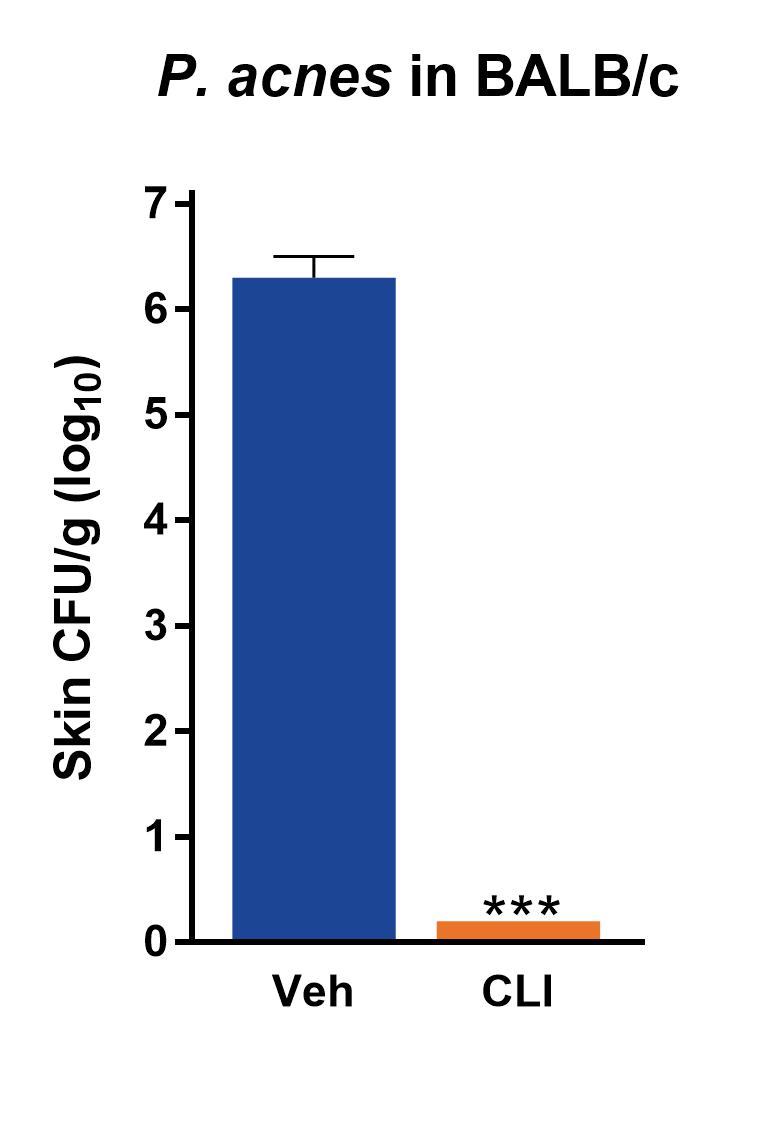
- Dermatology programs targeting Cutibacterium acnes, where the readout is reduction of dermal bacterial burden.
Intradermal is the dermis-level, barrier-bypassing option among the dermal models at TransPharm Preclinical Solutions. Where a full-thickness wound is needed, the deep wound model applies; where the question concerns infection established through a disrupted barrier, the tape stripping and scratch models are also available.
Scientific Scope
TransPharm Preclinical Solutions has validated the intradermal model with Cutibacterium acnes (still widely cited as Propionibacterium acnes):
- Cutibacterium acnes – ATCC 6919
- Cutibacterium acnes – HM-514 (HL043PA2)
The two isolates answer different questions. ATCC 6919 is the type strain, originally a facial acne isolate, and is the standard reference organism for the species. HM-514 (HL043PA2) is a sequenced human skin isolate from the NIH Human Microbiome Project reference set, which suits work that needs to be placed against genomic and microbiome data.
Strain selection carries real weight for this organism. C. acnes is not a single challenge organism: it comprises phylotypes that differ in their association with disease, with phylotype IA₁ enriched in acne lesions and phylotype II more often linked to healthy skin and to implant-associated infection. Those are associations rather than a clean virulent-versus-avirulent split, so a sponsor-supplied clinical or phylotype-defined isolate will answer a different question than either catalog strain.
Additional validations are available on request, and client-supplied isolates can be characterized and validated in the model before a study begins.
The intradermal model carries the same add-on measurements available across all in vivo work at TransPharm Preclinical Solutions: pharmacokinetic profiling and PK/PD analysis, blood chemistry, additional tissue harvests, and histopathology, each available on request. All studies run in an AAALAC-accredited facility.
Study Design
Procedure
Animals receive a single challenge with the infectious agent by intradermal injection. Studies are run in mice. Every study parameter is configurable to the scientific question: challenge strain, host strain, comparator agents, and dosing schedule.
Routes of Administration
Test article can be given topically or systemically – topical application, oral gavage (PO), subcutaneous (SC), intraperitoneal (IP), or intravenous (IV) – so dosing can match the route the program intends to use clinically.
Endpoint
The primary readout is bacterial burden in harvested skin, reported as CFU per gram. Pharmacokinetic profiling, blood chemistry, additional tissue harvests, and histology can be added to any study on request.
Sample Data